IT support & telephony
A great deal of work at the university is done using software or IT systems. This page includes information about multi-factor authorisation.
Telephony
During the summer, the university is changing its telephony supplier from Telia to Telenor and all the desk telephones will be removed. Instead, you will use a telephone in your computer. The computer client is called One X and will be installed on all staff computers.
If you have questions about telephony or your phone number, please email info@sh.se
When do we change operators?
The switch between telephony operators will take place on Thursday 29 June 2023.
Telephony support
Email info@sh.se if you need help with the Telenor One X computer client (e.g. logging in or getting a short introduction in how to use it).
You can also book a time with the university’s digital coach who will help you with questions about the university’s new telephony system. Read more here - Digitalt stöd - Medarbetarwebben (sh.se)
How will the switch from a physical phone to the Telenor One X computer client be done?
After Thursday 29 June, when we switch from Telia to Telenor, you will not receive any new incoming calls to your desk phone and will no longer be able to make outgoing calls from it. You will be able to log into the Telenor One X computer client, which is or will be installed on your university-administered computer, or which you have downloaded to a computer you administer yourself.
If you have a computer you administer yourself or want the Telenor One X computer client on your computer at home , you can download the app and computer client from https://www.telenor.se/foretag/kundservice/one/kom-igang/download-app-and-computer-client/ External link, opens in new window..
In the summer of 2023, your old desk phone will be collected for recycling/sale.
Can I keep my phone number?
Yes, everyone at the university keeps their current phone number, for both mobile connections and the old desk ones.
I am on holiday on 29 June – what do I do?
All members of staff with a desk phone will receive an email with information about how to login and use the Telenor One X computer client. It does not matter if you are on leave on 29 June, just log in when you are back at work.
If you have a mobile phone, switch your SIM on 29 June or when you are back from your holiday.
Will Telenor One X link to my Outlook calendar?
Yes, there is a link with your personal Outlook calendar. If you are set as busy in your calendar, this information is provided in the Telenor One X computer client; Infocenter can also see this information someone calls you via the switchboard. You can manually change your status in Telenor One X to something different to that in your calendar.
How do I use the Telenor One X computer client?
Telenor has good information in Swedish about how to use Telenor One X. Click on the link below and go to the heading “Guide för dator”.
Telenor has some information in English. You can also choose whether you want to set your language to Swedish or English in Telenor One X’s settings (inställningar).
Only people who have a mobile phone that belongs to the university (and a SIM card from Telenor) can access Telenor’s “Mitt företag” portal. This is because users need to verify their account using a mobile phone number.
Why can I see a mobile number in my Telenor One X computer client?
In technical terms, every subscriber has a mobile phone number with Telenor. This number is then linked to the number for your old desk phone (08-608 xx xx).
I will continue to need a physical phone due to work environment considerations – what should I do?
It is possible to have a physical telephone using the new telephony system. Contact your line manager if you need a physical telephone due to your work environment. It must be ordered via purchasing and paid for by your unit.
I need a pair of headphones for my computer. How can I get one?
Follow these steps to get a pair of headphones:
- Go to My page on Medarbetarwebben
- Fill in the form called "Collect IT equipment in the Infocenter"
- When the form has been filled in you will receive a case number by email
- Bring your case number to the Infocenter and collect the headphones
Multi-factor authorisation (MFA)
Multi-factor authorisation is a way to increase security when logging in using an SH-Account via our IT services. It means that you not only verify your login using a password, but you will also need to approve the login using your mobile phone or enter a code from an “SH-dosa” (a TOTP authenticator keyfob). The main reason for this is to protect our research data and all the information in university systems from being destroyed or falling into the wrong hands. It is also a legal requirement for all public agencies under MSB 2020:6.
Test multi-factor authorisation
You can test your multi-factor authorisation through this link:
https://app.sh.se/mfatest/ External link, opens in new window.
- If your multi-factor authorisation is correctly set up you will be requested to use it to log in. You will then be redirected to a website that confirms you are logged in.
- If it is not set up correctly you will instead be asked to configure Microsoft Authenticatior.
- If you have problems - read more under the headline "Managing and resetting methods for multi-factor authorisation" further down on this page.
Managing and resetting methods for multi-factor authorisation
You can manage your multi-factor authorisation methods via this link: https://mysignins.microsoft.com/security-info External link.
You can reset your multi-factor authorisation methods by re-collecting your SH-Account using mobile BankID via https://app.sh.se/konto/staff External link, opens in new window. or by showing an ID card at Infocenter.
Request to verify your identity using multi-factor authorisation
Multi-factor authorisation may be requested for various reasons.
- The system you are logging into requires multi-factor authorisation
- The login service calculates that your login is an increased risk, e.g. you are logging in from a new device, new location or similar.
- A certain time has passed since you last used multi-factor authorisation.
Two options for multi-factor authorisation
There are two different ways to use multi-factor authorisation. The simplest way is to use Microsoft Authenticator, which is an app installed on your mobile phone. If you cannot use Microsoft Authenticator on your mobile, you can use an “SH-dosa” – a TOTP authenticator keyfob.
- Open this website https://mysignins.microsoft.com/security-info External link. your computer’s web browser and log in.
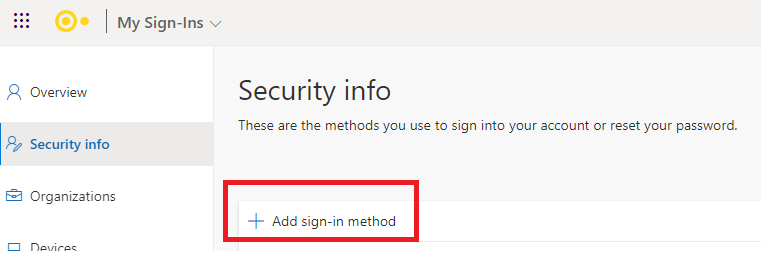
- On the computer, click on “Lägg till inloggningsmetod” / “Add sign-in method”
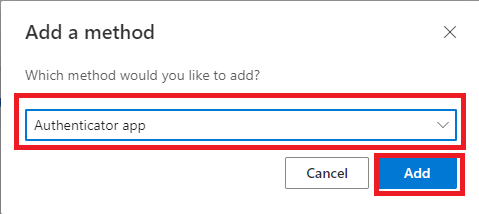
- Select “Autentiseringsapp” / “Authenticator app” and click on “Lägg till” / “Add”
- Click “Nästa” / “Next”
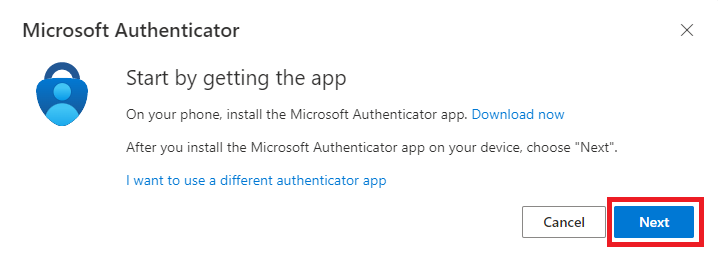
- Download the “Microsoft Authenticator” app to your mobile phone.
- Click “Nästa” / “Next” on the computer
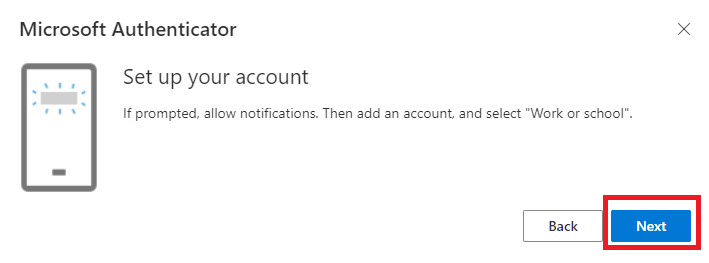
- On your mobile, start the Microsoft Authenticator app, click the plus sign
%20MFA-mobil-1-1eng.png)
- Select “Arbets- eller skolkonto” / "Work or school account"
%20MFA-mobil-2-1eng.PNG)
- Select “Skanna QR-kod” / “Scan QR code”
%20MFA-mobil-3-1eng.PNG)
- A QR code should now appear on your computer. Use your mobile to scan the QR code.
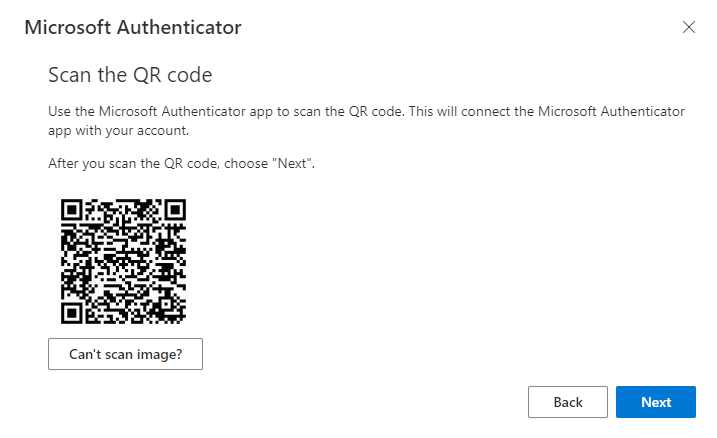
%20MFA-mobil-4-1eng.PNG)
- On the computer, click “Nästa” / “Next”
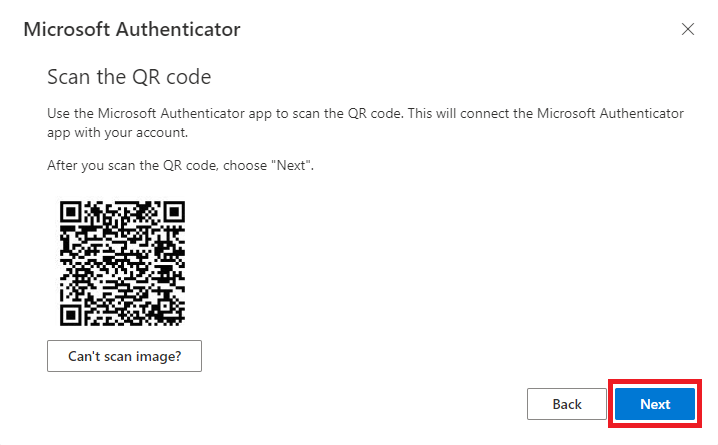
- The computer displays the text “Låt oss prova” / “Let’s try it out”
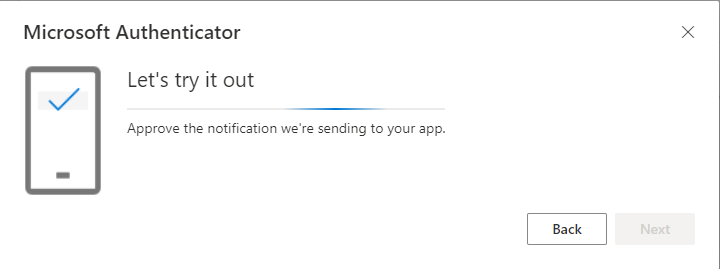
- On your mobile, click “Godkänn” / "Approve"
%20MFA-mobil-5-1eng.PNG)
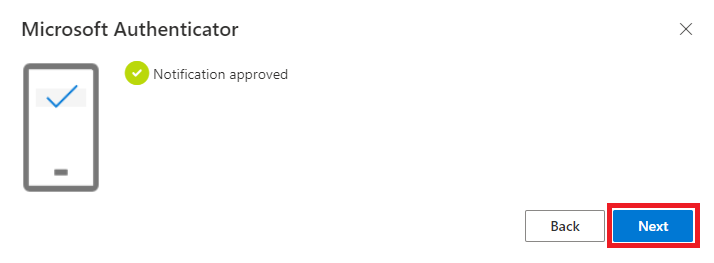
- The computer shows that everything worked
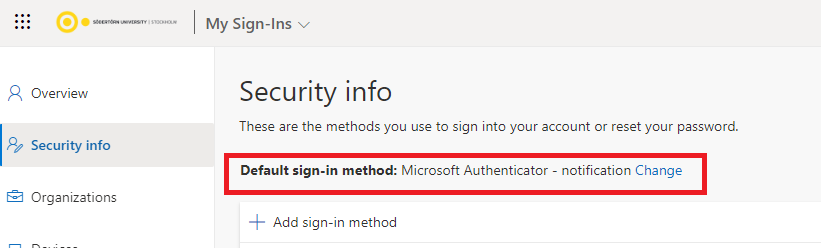
- You need to make Microsoft Authenticator the standard method for authentication in your computer. If it is not, change by selecting “Ändra” / “Change” and switch to Microsoft Authenticator.
- Finished!
Multi-factor authorisation is a way to increase security when logging in to our IT services using an SH-Account.
Manage your methods for multi-factor authorisation
You can manage your multi-factor authorisation methods using this link https://mysignins.microsoft.com/security-info External link.
Test multi-factor authorisation
You can test your multi-factor authorisation through this link:
https://app.sh.se/mfatest/ External link, opens in new window.
- If your multi-factor authorisation is correctly set up you will be requested to use it to log in. You will then be redirected to a website that confirms you are logged in.
- If it is not set up correctly you will instead be asked to configure Microsoft Authenticator.
- If you have problems - read more under the headline "Reset methods for multi-factor authorisation" further down on this page.
Reset methods for multi-factor authorisation
You can reset your multi-factor authorisation methods by re-collecting your SH-Account using mobile BankID via https://app.sh.se/konto/staff External link, opens in new window. or by showing an ID card at Infocenter (e.g. if you no longer have access to your mobile phone).
Information
Questions about page content? Use the contact in the relevant expander.
Want the page updated? - Fill in this form
For other questions, please email info@sh.se